Arthouse Cinema Meets: Marketing Strategies for European Arthouse Cinema Day
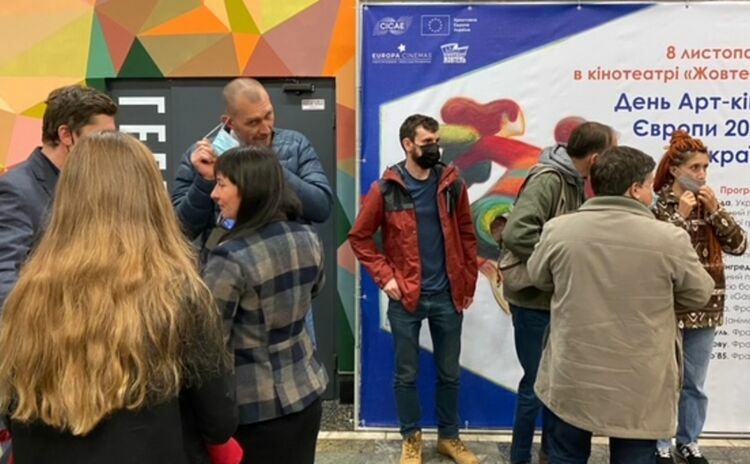
European Arthouse Cinema Day is a great opportunity to experiment with your programming and to try out new marketing strategies. Ahead of the 11th European Arthouse Cinema Day, which takes place on 22 November 2026, we’ve been hosting online Arthouse Cinema Meets, which allow CICAE members to share ideas about programming and marketing strategies. On 29 October 2026, we brought together three independent film initiatives to discuss how they will be promoting their chosen titles this year. Between them they offered three inspiring, transnational case studies exploring how we might do cinema a little bit differently.
We’ve summarised their presentations below. Please note, quotes have been edited for clarity and length.
“ I ask myself, who can I reach with the resources I do have – my time, my network, my energy, my passion… ”
Film producer and consultant Júnia Matsuura, is originally from Brazil and currently based in Germany. She’s the founder of the independent film distribution and screening initiative WE ARE HERE, and co-founder of ABRASIA: Brazil-Asia Film Association “This is my third consecutive European Arthouse Cinema Day. As a new independent distribution initiative, we are used to marketing with few resources” says Matsuura. “ I ask myself, who can I reach with the resources I do have – my time, my network, my energy and the passion for the films I’m screening?”
Having collaborated with the past two European Arthouse Cinema Days – this year she joins as a distributor, with films featured in our recommended programming list – Matsuura is well-versed in the advantages of the programme. “European Cinema Day is a great opportunity, because there are already promotional materials available. You can screen a film which doesn’t have a distributor, like it’s a festival.” She emphasises the importance of making the most of that in-built support, by tagging CICAE and Cinema Day in posts, and posting “collabs” with partners to broaden the scope of these potential online audiences. Displaying the initiative poster prominently in your chosen venue – the posters can be sent out or printed out manually if the destination is far away – also increases visibility.
Incorporating special elements such as food and performance, is one way to make these screenings feel different to your usual programming. Matsuura strongly advocates booking more daring titles – in previous years she has worked with experimental films such as Ancestral Visions of the Future (Lemohang Jeremiah Mosese, 2025) and Pepe (Nelson Carlo De Los Santos Arias, 2024), both of which had previously screened at Berlinale. Arthouse Cinema Day therefore offered a rare chance to see the titles in a cinema setting, and emphasising their “limited edition” nature was a key marketing strategy. This year, We Are Here have selected Lost Land (Akio Fujimoto, 2025) to screen in Berlin.
After the recent elections in Brazil, where social media campaigns played a powerful central role in the re-election of Lula, Matsuura is drawing inspiration from the tactics she saw at work amongst activists. “I’ve learned a lot in the past few weeks, we were constantly online and it was a different way of using social media. Instagram, WhatsApp and Telegram channels and groups are my way of communicating with my audiences. At the moment, I want to expand into a newsletter too.” Most of We Are Here’s organic promotion revolves around WhatsApp and Telegram groups, alongside Instagram stories, which should always include a booking link to maximise the chances of turning digital engagement into IRL attendance.
Júnia Matsuura’s Top Tips: Summarised
- Make the most of the resources you have – if you’re low on cash, you might be rich in terms of networks, passion, an engaged community and expertise.
- Make an event of it! Food and other extra elements, such as performances, can be a great entry point for new audiences.
- On social media, pay attention to the details. Tagging partners and scheduling collaborator posts can increase your reach, and don’t forget to add booking links to story posts.
“ There's a difference between when you do it with love, and when you do it just for a job… ”
Tatenda Jamera is a UK-based filmmaker and curator focused on African arthouse cinema, and the founder of Maona Art. After taking part in CICAE’s Arthouse Cinema Training in 2024, he established Maona Cinema, an independent cinema based in Oswestry, England. “We focus on African arthouse cinema in the UK and we pick up titles that don’t necessarily get distribution,” explains Jamera. “We pick about four or five titles a year, and then we circulate them or tour them across the UK. It’s an informal way of distributing. If it already has distribution we support it to make sure it reaches the right audience. Just because an African title has a distributor, doesn’t mean it’s in safe hands. It still needs to get to the right people.”
In February 2026, Jamera served on the jury for the CICAE Arthouse Cinema Award at the Berlinale Forum, and selected Tudor Cristian Jurgiu film On Our Own as the winner. A Romanian-Italian coming of age film, On Our Own, is a change from Moana’s usual focus, but Jamera’s passion for the film is infectious. However, he’s aware that reaching a local audience in a rural area with this title will be a challenge. “It’s a small town of about 25,000. The audience here rely on word of mouth. Although we will be using a digital approach as well, we really have to push word of mouth to get through”.
Jamera’s promotional plan is carefully scheduled over the weeks leading up to the screening. In week one, the focus will be on raising awareness. “Most of the films we show are in English, so because this is a foreign language film, we're going to have to work a bit more to really push it to our audience, for them to understand what the film is,” says Jamera. “We'll share the film's strongest themes: family, loneliness, and belonging. We're going to really push those themes, and for the audience to understand that although it's a Romanian film, it’s relevant to where we are and the audience who surround the cinema.”
Proactive personal outreach is key within this rural context. “We're going to personally contact 5-10 potential community partners. There is no way a film like this would work without partners, local partners. We cannot just put it on the website and expect people to show up, that’s not going to work. We're going to need local partnerships with groups and communities who are relevant to the film.” Once those partnerships have been established, the cinema will work with those organisations to repost the booking link and issue direct invitations to their audiences, perhaps using promotional codes – such as buy one get one free offers – to incentivise take up. The screening will also be pushed directly to previous attendees using the cinema’s mailing lists. In the final few days before the screening, there will be an emphasis on a saturation of social media posts, including competitions and proactive tagging of local networks. This is particularly because Jamera knows Maona’s audience can be quite spontaneous, with a high level of last-minute walk-ups. Therefore, keeping the visibility of the film high right up until the screening begins, could make a real difference.
Ultimately however, Jamera’s advice to other venues is to lead with passion. “There's a difference when you [promote a film] with love, and there's a difference when you do it just for a job. When you look at the programme for the films, really pick films that you love because you’re going to act differently if you love them. It's better to do one film that you love rather than do five films just to fill in the programme.”
Tatenda Jamera’s Top Tips
- Learn how your audience communicates – while digital is often the default, smaller communities might be much more responsive to word of mouth.
- If you have a pre-booking audience, then make sure your events are on sale well ahead of time; if your crowd is more spontaneous, keep visibility high on the day of the screening.
- Lead with love! Audiences can sense genuine passion and will respond to titles which programmers feel strongly about.
“ Overall the atmosphere in the room is very funky, because we are a bunch of strange people who love cinema! ”
Ingrid Machado is a Brazilian filmmaker and curator based between Europe and Latin America. Like Júnia Matsuura, Machado feels that she has learned a lot from her involvement in activism around the Brazilian election. “I think one thing that I learned from the election campaign this year, it's that there’s plenty of room to merge the online and offline word, not totally ignoring one or the other,” she says. “How can they both complement each other, and how can we translate what is happening online to the in-person events as well?”
As founder of the Solax Film Club (https://www.instagram.com/solaxfilmclub/?hl=en) and the Brazilian Film Festival in Ireland (BFFI) (https://www.bffi.ie/), Machado has lots of experience of seeing how digital communities might translate into real life audiences. “Solax Film Club works like a pop-up cinema,” says Machado. “Every month we go to different venues, and the screenings are non-theatrical and community focused. I'm not too focused on everything being pristine. Obviously, I want a good image and good sound. But everyone that comes to the film club understands the nature of it, and it's very DIY. Everybody in the club also helps troubleshoot as we go along.”
One example Machado gives, is a screening that took place in October 2025, in a cold warehouse to over 100 people. “It was freezing, really, really cold… But then a person living nearby start coming with hot water bottles, and somebody brought tea and thermals, and so everybody start adding to it. Today I have a community that always come to the screenings wherever I navigate in the city. I'm really focused on that, on building the connections between the people coming to the screenings, through the films that we are showing and the discussion that we are having after.”
This sense of informality is key to what makes Solax screenings feel special. “There’s no profit involved, so that means that I try to keep the price of the tickets as affordable as possible,” explains Machado. “It's BYOB, so people usually bring their own drinks. Overall the atmosphere in the room it's very funky, and because we are a bunch of strange people who love cinema…I like to work mostly outside the formal institutions. I collaborate with other collectives, not only in Ireland but worldwide, as much as possible.”
This year Machado has decided to screen Prosecution, directed by European Cinema Day ambassador Faraz Shariat, which also won the CICAE Arthouse Cinema Award at the Berlinale. She is excited about how the film’s themes around immigration and racism might speak to local audiences in Ireland. “I hope with this screening to create a bridge between the two worlds: the working class Dublin Irish people and also the working class immigrant people,” says Machado. “These are people cohabiting the Solax environment.”
In planning the screening, Machado will draw on previous experiences of screening European Arthouse Cinema Day titles within Solax. She usually makes short videos introducing the films, which she shares to Instagram, cross-posting with partners. She emphasises the value of knowing how to speak to your audience. “I like to keep everything in Solax very casual. I don't make the language highly academic because I wouldn't reach my community. My community mostly do not have English as their first language, so I like to keep it very accessible. Sometimes language could be the first barrier to reach out to underrepresented communities.”
Machado often operates without marketing budget, and she recommends getting the basics right. A simple website, even a one page site, is a great help when promoting beyond a specific social media platform. She has recently started a mailing list, and this will be a key focus alongside Instagram. For fellow pop-ups, she suggests creating guides and videos to help audiences find the venue and to navigate the space. Above all, she says its important to be consistent. “People are very familiar with the casual language that I use now. I'm not trying to be too serious and it works with my audience. You need to know what works for your audience.”
Ingrid Machado’s Top Tips
- Watch your language. If your audience responds better to clear, accessible language over academic, “film speak,” then play to those strengths.
- Be yourself! If your vibe is more casual, DIY and spontaneous, don’t feel you have to pretend to be more formal than you are.
- Keep it simple – even a basic website can make a big difference to how your easy it is for your audience to find you.
04.11.2026

Rachel Pronger
Rachel Pronger is a writer, curator and editor based in Berlin. She began her career working for festivals and cinemas across the UK, including Tyneside Cinema, Edinburgh International Film Festival and Alchemy Film & Arts. She has served as a programme advisor for Sheffield DocFest, BFI London Film Festival, Alchemy Film & Arts and Aesthetica Short Film Festival. Her writing on film and visual art has been published by outlets including Sight and Sound, Documentary Magazine, The Guardian, MUBI Notebook, Art Monthly and BBC Culture, and she is the co-editor of online journal Cinema of Commoning. Rachel is also the co-founder of Invisible Women, an archive activist feminist film collective which champions historic work by women and marginalised gender filmmakers through curation, events and editorial. more from the author