From Festival Buzz to Box Office: Inside International Sales with Films Boutique
Around 2700 feature films are produced in Europe every year with a cinema or festival release in mind, and more than 7000 worldwide. Distributors and programmers cannot possibly watch them all – and this is where sales agents come in, helping to discover and promote the most talented voices in the industry. These figures are estimates by Julien Razafindranaly, Head of Sales at Films Boutique, who explained what this role involves at an Arthouse Cinema Meets session during the CICAE Arthouse Cinema Training 2026. This article summarises his talk: how he and his colleagues find, assess and sell films, and why a film’s value is still created in the cinema.
The Middlemen Behind the Films on Your Screen
Sales agents work business to business, far from public view. “We are middlemen, pretty much working in the interest of the producers and filmmakers to get their movies seen, travelling and sold internationally,” Julien explained. They scout and filter films first and foremost for local distributors, but also for festival programmers, broadcasters and VOD platforms, which do not have time to approach every production company themselves. Sales agents never buy a film as a whole: instead, they secure specific rights for given territories and periods, and then license them to buyers around the world, except in the production countries.
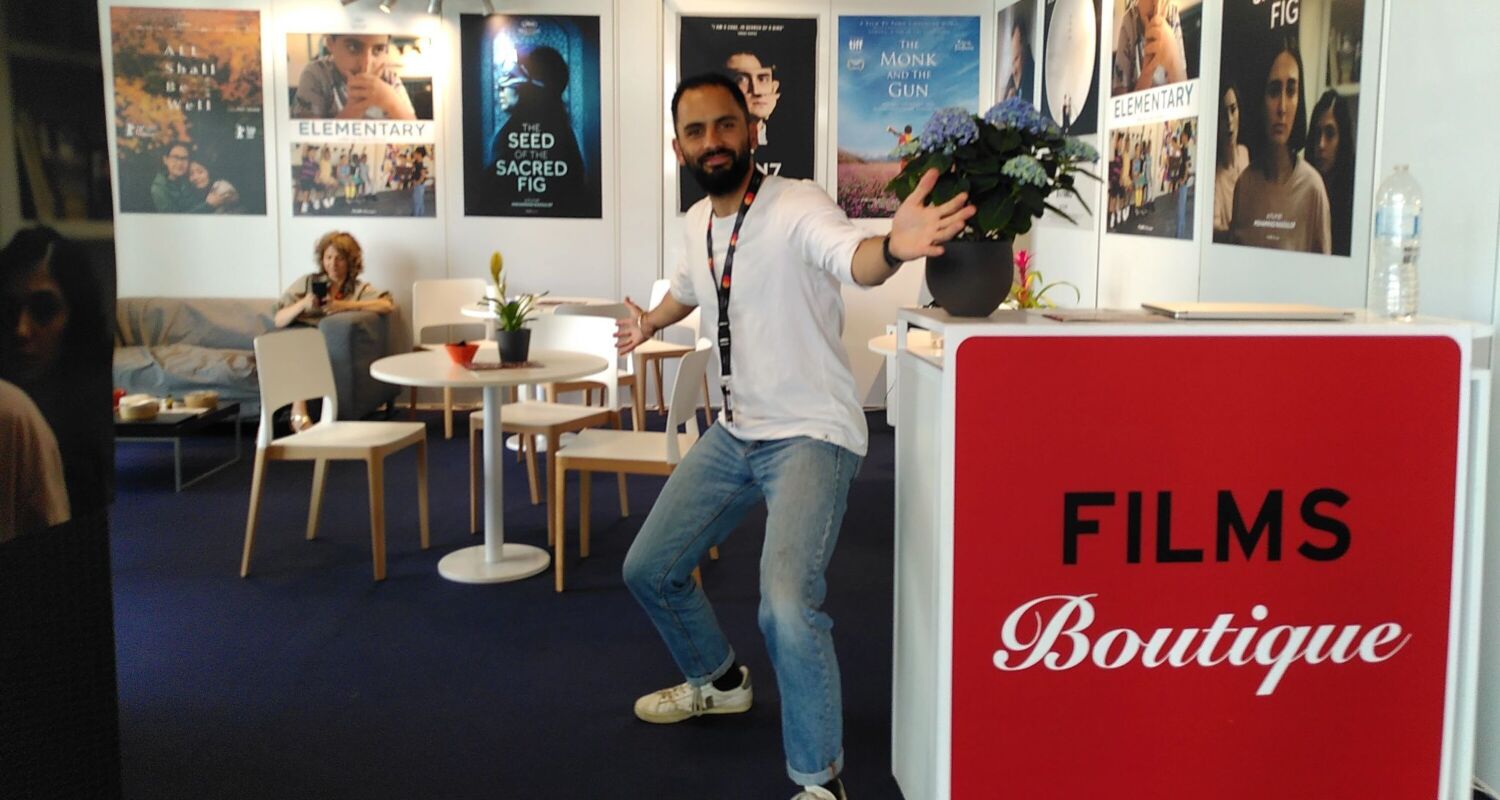
Films Boutique has a team member dedicated to acquisitions, who travels to festivals, work-in-progress showcases and co-production markets to get the fullest possible picture of what is being made across the globe. Selection for a leading co-production market, such as the Berlinale’s, serves as a “stamp of validation”. Other titles arrive via existing relationships, the line-ups of major festivals in Cannes, Berlin, Venice and Toronto, films sent in directly by producers and chance encounters.
When valuing a film, an agent draws on knowledge of the market: to whom and for how much similar films from the same region were sold, how many admissions they made and which festivals screened them. That determines what the agent is prepared to invest in the film – for example, as an advance to the producer, known as a minimum guarantee. But the numbers are not everything: Films Boutique deliberately works with first- and second-time filmmakers, even when their work may not make much money, because success may come later, with their next projects.
The Many Jobs of a Sales Agent
Finding a film and acquiring the rights is only the beginning. Even before it is first shown, the agent joins the producers and the PR team in shaping the marketing. They choose stills for the poster, develop the trailer and synopsis and decide which of the film’s themes to put front and centre. The agent also plans the festival strategy: ideally a “golden” world premiere at a major festival first, then regional ones. Getting this right matters, because an early screening at a small festival can “kill” a film’s world or international premiere – and that, in Julien’s words, is “something you don’t really get back from”.
Then come the sales: the agent looks for the best partners in each region, negotiates, signs contracts, makes sure buyers pay and takes care of the technical side. For the first year to 18 months of a film's life, the agent focuses on selling it to theatrical distributors; if those sales do not happen, or only in a few territories, the film moves into the catalogue, where VOD platforms and broadcasters buy it for smaller sums.
In addition to that, the agent coordinates the film’s release in different countries, runs awards campaigns, reports back to the producers. Another task is organising promotional trips. When a film is a success, many of the distributors who paid for it want the director and cast to come, and fitting everyone's schedules together can be a real headache.
Case Study: The Seed of the Sacred Fig
Julien also shared the story behind Mohammad Rasoulof's The Seed of the Sacred Fig. Films Boutique has a long-standing relationship with the director, which it values highly: the company also sold his previous film, winner of the 2020 Golden Bear, and this year it even took on a short by Rasoulof – an exception for a company that works almost exclusively with features. The Seed of the Sacred Fig won the Special Jury Prize in competition at Cannes in 2024 and became arguably the most successful title in Films Boutique’s history. Rasoulof was already an established name, but his escape from Iran just before the premiere put the film on prime-time news in many countries – and it reached audiences who would otherwise never have heard of it.
The film is set in autumn 2022, as mass protests swept across Iran and follows a household divided by them. The father works for the state, his teenage daughters sympathise with the demonstrators, and the family story gradually turns into a paranoid thriller. That created a dilemma: should the film be sold as a thriller, or as a family drama more likely to appeal to arthouse audiences? In the end, Films Boutique did something it rarely does and used both approaches, bringing two posters to its Cannes booth – one showing the mother with her two daughters, the other a blindfolded daughter. Distributors split accordingly: some, like Pyramide in France, went for the drama; others, such as the buyers in Spain and Denmark, went for the thriller.
In France, the film drew 727,169 admissions, in Germany 200,000 and in Italy 111,009. It was also selected as Germany’s Oscar entry, because Rasoulof was a tax resident there, and went on to earn an Academy Award nomination. In the US, box office was surprisingly modest at $277,429, but the distributor, Neon, then made around $1 million from VOD, TV and other rights. For Julien, this shows that audiences seek a film out at home precisely because it was in cinemas first.

Where Cinemas Come In
“The theatrical distributors are our first partners, and therefore the cinema ultimately, because that’s where the value is created for our films,” Julien said. A Cannes premiere certainly generates buzz and press attention, but for most films it stays within the industry’s own bubble. What takes a film to the wider public is the local release – when the poster hangs in the cinema foyer and the trailer runs on screen. If a film goes straight to a streaming service instead, the revenues would not compare.
Cinemas can act directly, too: programmers get in touch with sales agents about festival films that nobody has bought for their territory. “It happens more and more that cinemas reach out to us and are asking for the rights for our movie for what we call a limited release, or just a few screenings,” Julien noted. Digital DCP delivery makes this easier, and Films Boutique’s English-subtitled versions work in many big cities. If a film you loved at a festival has no distributor in your country, why not get in touch with its sales agent?
It is worth adding that some cinemas have turned this kind of direct work with agents into a regular programme. In October 2023, London’s Institute of Contemporary Arts (ICA) launched Off-Circuit, a strand for independent films that have not managed to secure UK distribution. Each film runs at their cinema for a week, often followed by a Q&A with the director. In three years, Off-Circuit has shown more than 50 films, from Wang Bing and Kleber Mendonça Filho to Hong Sangsoo and Radu Jude. Similar initiatives exist in other European countries too.
No Universal Recipe for Success
Every year more films are made for the big screen while audiences shrink, so everyone in the market, including sales agents, tries to minimise risk. Buyers compete for a handful of festival hits, sometimes pushing prices too high. Everything else has a much harder time: first and second features that once sold to 10 or 15 countries now often go no further than festivals and never reach local cinemas.
According to Julien, there is no universal recipe for success in this situation: every film is unique, and even the most careful calculations cannot guarantee that it will find its audience. But his talk made one thing clear: however much buzz a film generates at markets and festivals, its value is ultimately determined in the cinema. That is why cinemas should see sales agents not as a distant link in the industry chain, but as potential partners. The better they understand how this work is done, the more films that would otherwise be lost on the festival circuit will find their way to audiences.
09.10.2026

Dmitry Frolov
Curator, researcher and cultural worker active across contemporary art and cinema, with extensive experience in film festivals, art institutions, television, film theatres and education. Dmitry holds an MA in Film Programming and Curating from Birkbeck, University of London, and a BA in Cultural Studies from the Russian State University for the Humanities. He has collaborated with a range of festivals and cultural institutions, including e-flux, Flanders Arts Institute, Fotografiska Berlin, ICA London, Image Forum, Pushkin House, Kunstnernes Hus, AV-arkki, International Short Film Festival Oberhausen, Bucharest International Experimental Film Festival, Multimedia Institute Zagreb, Çatı Gallery, Moscow International Experimental Film Festival, Garage Museum of Contemporary Art, among others. Currently based in Berlin, Germany. more from the author