Get Them Young! The Unstoppable Rise of Baby-Friendly Screenings
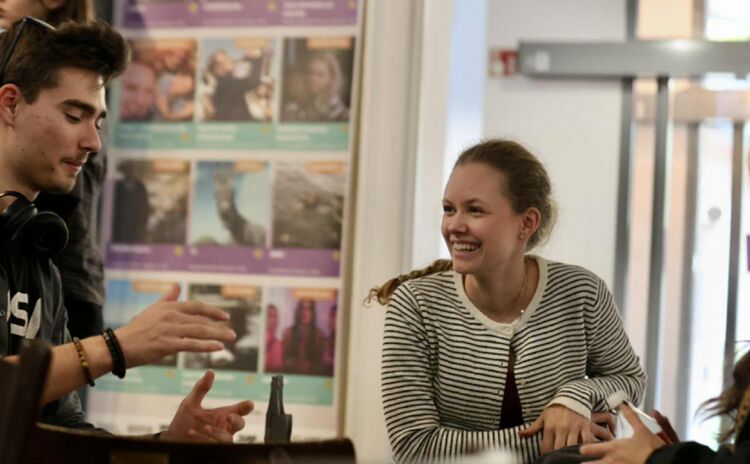
Every Tuesday morning at 11am, the bar of Wolf Kino in Berlin, fills up with strollers, baby carriers and nappy bags. Since the cinema opened in 2017, they’ve been running a regular Babywolfgang slot, a strand dedicated to parents and their babies. For the audience, these screenings offers a weekly oasis in the frantic routine of new parenthood, a safe baby-friendly space to socialise, relax and catch a new release on the big screen, alongside accommodating staff and a sympathetic audience.
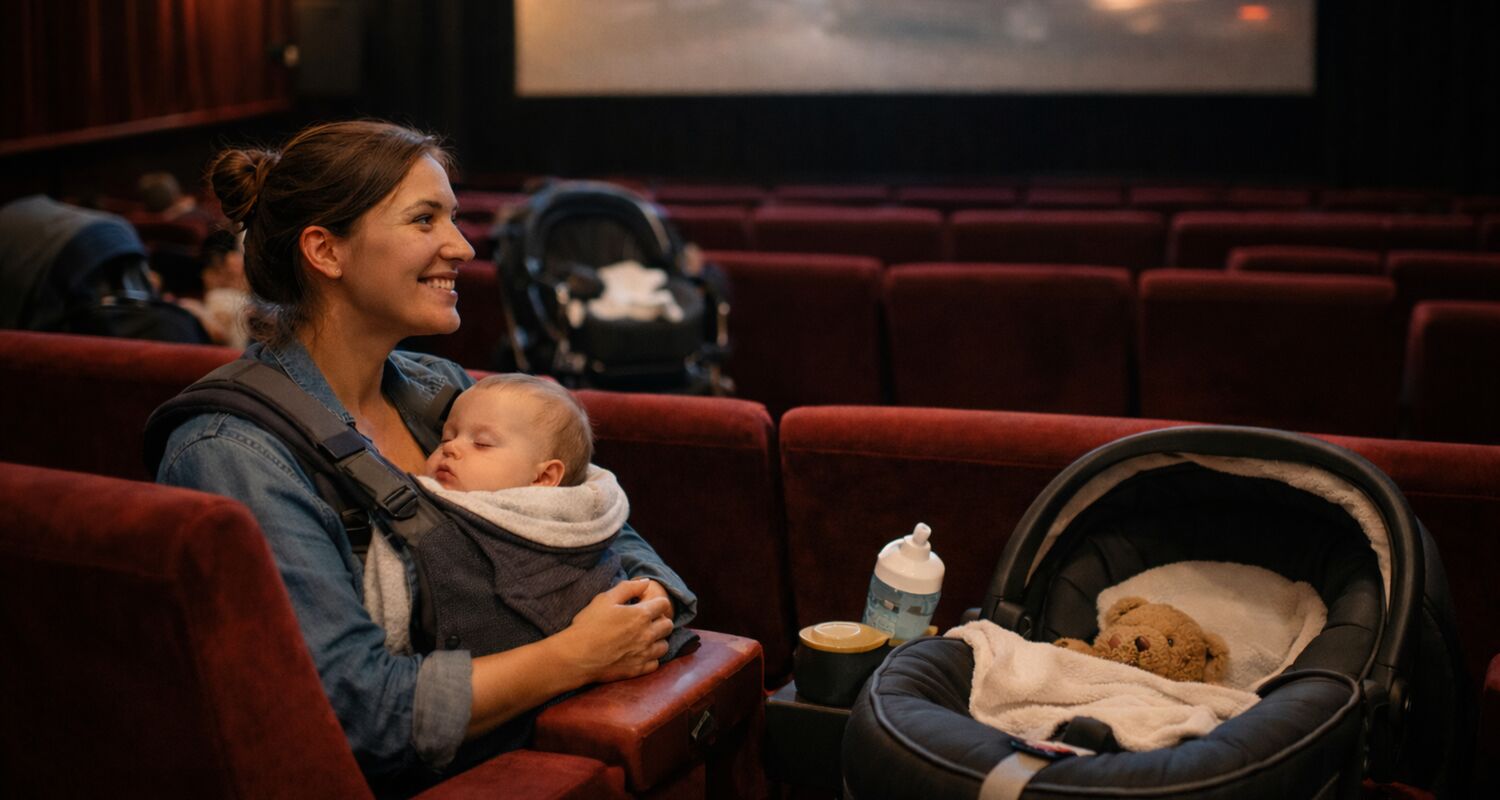
In some ways, baby-friendly screenings are counterintuitive. The set up required to make a screening suitable for infants and their carers breaks some of the fundamental expectations of cinemagoing — a dark auditorium, total silence and uninterrupted attention. At baby-friendly screenings the usual rules of polite cinemagoing are put aside to make space for this newest generation of tiny cinemagoers. In the screen, volume is reduced, lighting is only half-dimmed, and new parents spread out with their babies across the red velvet seats. Breastfeeding and sleeping in the screen are encouraged, as is coming in and out of the auditorium, and moving around the aisles to soothe a baby on the edge. Crying and occasional tantrums are only to be expected.
Yet, despite the challenges presented by baby-friendly cinema, this screening format is becoming increasingly widespread in international film exhibition. In the UK for instance, parent and baby screenings have been well-established for around two decades, part of the core offer at both independent venues and multiplexes. This rise can be seen as part of a wider trend towards different kinds of relaxed screenings across the cinema landscape, including offers aimed at neurodivergent cinemagoers, participatory events with young children and dementia-friendly offers. While the target audiences for these different screening varies dramatically, what they share is a willingness to accommodate the specific needs of different parts of society. Baby-friendly screenings offer a signal to new parents that they are a welcome in cinemas even though they have progressed to a new life stage. A great baby-friendly offer therefore, can play a crucial role in establishing and deepening the relationship between a venue and the community it serves.
Making a Cinema Baby-friendly
This has certainly been the experience at Wolf Kino, where baby-friendly screenings have been part of the programme since the very beginning. Verena von Stackelberg, Founder and Managing Director at Wolf Kino, first came across the baby-friendly format while working in London. When she came to opening the cinema with her team, von Stackelberg had a new baby herself and so it seemed logical to offer a dedicated slot to new parents. “I always loved the idea of offering young parents the chance to do something for themselves and stay connected to arts and culture in this way,” she remembers. “Two close friends of mine from the film world, Vera and Valeska, also had babies and helped me set up the infrastructure for it, from the perfect screen-set up to nappy changing facilities.”
The format for these screenings is carefully thought through, as von Stackelberg explains. A mid-morning slot coincides with the time when most babies take a longer nap, making it more likely for parents to be able to enjoy stretches of the film uninterrupted. Due to space limitations (familiar to many arthouse venues), strollers can’t go in the screen, so are moved to one side during the screening to avoid blocking fire exits, and a nappy changing table is made available. Films in these slots are played with subtitles, to offset the lower volume and to help distracted cinema goers to keep track of the film.
For venues considering initiating a baby-friendly slot, it’s worth noting that most cinema limit their baby-friendly offer to children under 11-months old. At this age babies are less mobile, happier sitting still for long periods of time, tend to ignore the screen, and often sleep for long periods through the film itself. Around the 12-month mark, children begin to be more mobile and are more likely to start responding to the screen itself. While films selected are aimed at adult cinema goers, the parents, programmers should be aware of potentially sensitive or triggering content. Especially violent or stressful films are probably best avoided, but it’s also important not to patronise the audience. Ensuring that listings contain clear content warnings can be useful, as this encourages parents to consider for themselves what kind of films they are comfortable watching with their babies.
While longer films are also perhaps not the most practical, von Stackelberg admits she couldn’t resist programming Kleber Mendonça Filho’s labyrinthine conspiracy thriller The Secret Agent, or Lynne Ramsay’s admittedly rather violent Die My Love, about a woman adjusting postpartum life, in recent slots. In those cases the quality of the film and topicality of themes seemed too good to miss, and both events did well (I attended The Secret Agent screening myself, with two friends and their new babies, and can confirm it was packed). “Parents are hungry to watch the stuff others watch, so I believe it is very important for them to stay connected to what’s going on” says von Stackelberg, “In that sense, the films we pick are unquestionably the best quality, current arthouse stuff.”
More than a Film Screening
There’s more to baby-friendly screenings than simply the practicalities of setting up a screening. For many new parents, these events offer a vital lifeline in the fraught days of early parenthood, and the social opportunities offered by these slots can be as important as the film selections themselves. “I think parents love the whole package: watching a great film in a cinema, a social space, in the comfort of other parents and babies.” says von Stackelberg. “There’s a beautiful solidary energy coming from the audience.” That sense of connection continues after the screening, where many parents stay in the cinema’s bar afterwards. “Since we offer lunch in our café anyway, this helps for the social side.” says von Stackelberg. “I believe we could expand on this and offer some form of networking after the screening: the exchange of baby clothes and sharing useful information about child care for examples.”
As these observations demonstrate, baby-friendly screenings can play a key role in helping position a cinema at the heart of the community, a third space offering more than just films. Word of mouth has become vital to the ongoing success of screenings at Wolf Kino, as visitors recommend Babywolfgang to their friends who have recently had babies, and lasting friendships have grown out of these screenings, as parents have been able connect with others undergoing the same experiences of transition. Von Stackelberg and her team have also had the pleasure of watching their littlest audience members come of age and continue on their journey as cinemagoers; von Stackelberg is proud to confirm that the first generation of Babywolfgangs have already been to watch their first family films in the cinema.
Top Tips for Establishing Baby-friendly Screenings from Wolf Kino’s Verena von Stackelberg
- Start off by inviting friends and family members with babies, and attend one yourself to get a sense of how the events run.
- Introduce the screenings, and be approachable for your audience so they give constructive feedback.
- Create a section on your website dedicated to the event and provide as much information in your FAQ’s as possible.
- If your newly establishing your screenings, I recommend a grass roots approach to marketing – flyers in kindergartens, paediatricians, gynaecologists and women’s health / family centres are good, and also spread the word through relevant local shops and specialist listing sites for parents and babies.
- Open up at least 30 mins before the film starts and make sure you have your coffee machine ready to go! Stock up on decaffeinated coffee, non-alcoholic beer and cake.
10.02.2026

Rachel Pronger
Rachel Pronger is a writer, curator and editor based in Berlin. She began her career working for festivals and cinemas across the UK, including Tyneside Cinema, Edinburgh International Film Festival and Alchemy Film & Arts. She has served as a programme advisor for Sheffield DocFest, BFI London Film Festival, Alchemy Film & Arts and Aesthetica Short Film Festival. Her writing on film and visual art has been published by outlets including Sight and Sound, Documentary Magazine, The Guardian, MUBI Notebook, Art Monthly and BBC Culture, and she is the co-editor of online journal Cinema of Commoning. Rachel is also the co-founder of Invisible Women, an archive activist feminist film collective which champions historic work by women and marginalised gender filmmakers through curation, events and editorial. more from the author