Making the Most of European Arthouse Cinema Day
European Arthouse Cinema Day, which takes place every year in November, is an annual highlight for many independent venues, offering a collective moment to celebrate the richness and diversity of European cinema. If you’re new to the initiative however, you might be wondering how you can take part more fully in this global movement.
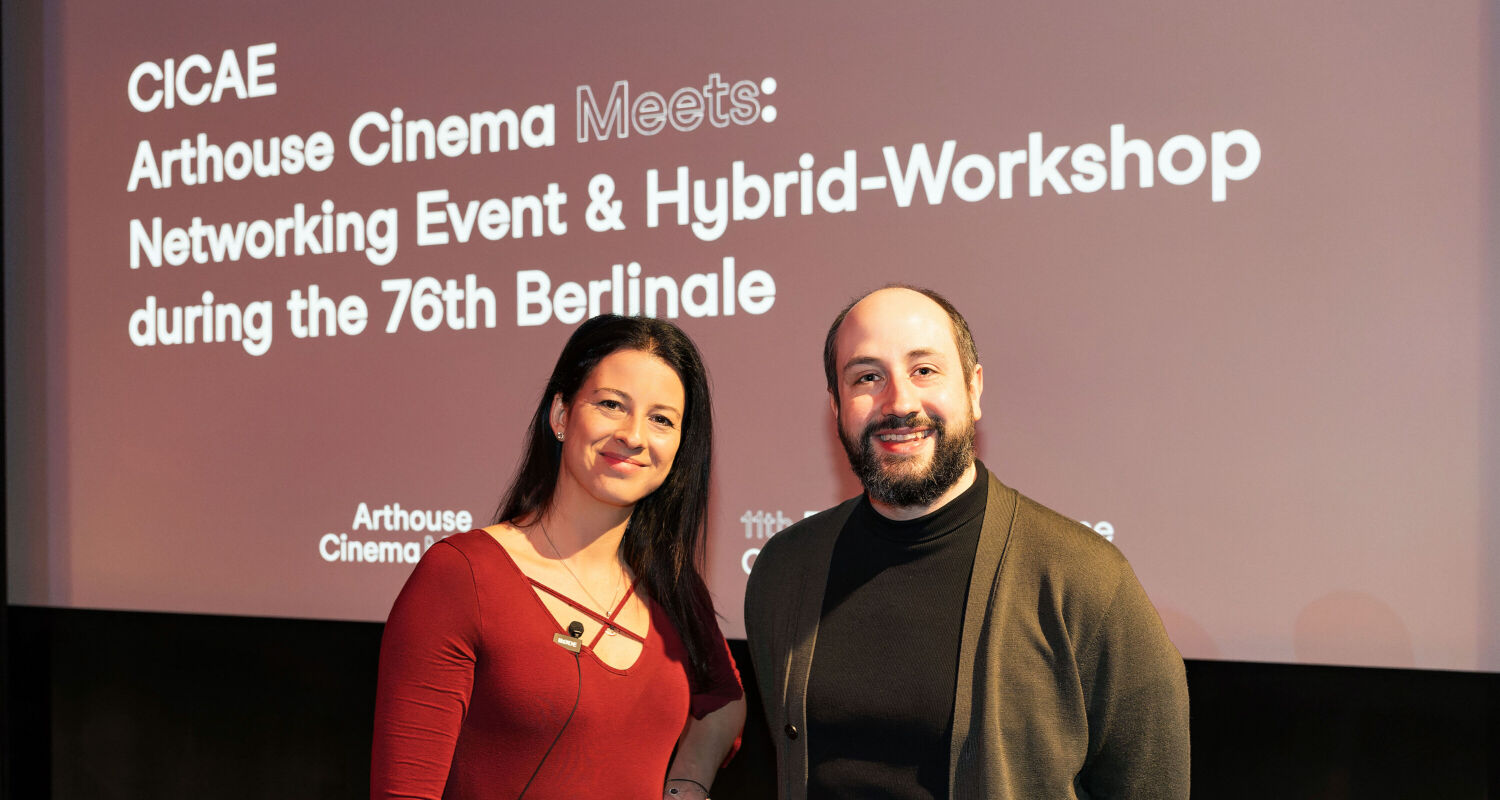
As part of CICAE Arthouse Cinema Meets, a hybrid workshop which took place in Berlin during the 76th Berlinale, Éva Demeter (Art Mozi Egyesület, Hungary) presented a talk, “Let's watch European films — How to boost European Arthouse Cinema Day?” which addressed this very question. You can watch the full presentation here, but below we summarise some key recommendations and ideas:
Why Is It Worth Taking Part?
First things first, what can European Arthouse Cinema Day bring to your venue? In the record breaking 2025 edition, the E attracted 100,000 spectators in over 660 cinemas across 43 countries worldwide. It’s also a truly global programme; in 2025 new partners joined from Rwanda, Armenia, Kyrgyzstan and Uzbekistan.
The Cinema Day is free to join, and all registered venues have access to marketing and event materials for cinema day activity, as well as programme tips, special licensing deals on selected films, free workshops and advice. The project is also supported by an impressive line-up of ambassadors from across the film industry; in 2025 these included celebrated filmmakers Mascha Schilinski (The Sound of Falling), Carla Simón (Alcarràs), Karim Ainouz (Motel Destino) and Sean Baker (Anora).
Registration will open for this year’s edition in September 2026.
How Can I Make the Most of EACD in My Cinema?
So, you’re signed up and ready to go… but how can you maximise this opportunity? As Director of Tisza Cinema Ltd, Éva Demeter leads TISZApART MOZI, a three screen, family run arthouse cinema in Szolnok Hungary, where she has been successfully running Th programmes for years.
Below Éva presents some of her top tips for a successful event, but she is also keen to emphasise the importance of international collaboration and inspiration, principles which lie at the heart of the European Arthouse Cinema Day project. “I can’t give you the recipe today, because I don’t know what works in different countries and cinemas, but we can keep thinking and brainstorming together,” she says. “You don’t have to invent it all yourself, you can talk to colleagues and steal nice ideas from each other!”
Turn EACD into a Full Day of Activity
Éva always tries to envision European Arthouse Cinema Day as a whole day, imagining an audience arriving in the cinema in the morning and leaving in the evening. Stretching activity in this way allows access to the widest possible audience, with different timeslots targeting different demographics.
In 2025, the TISZApART Cinema programme began in the morning with family films and an interactive children’s performance by a band. Alongside feature films, award-winning shorts from the Kecskemét Animation Film Festival were also screened followed by a collaborative sand animation session for the audience led by a visiting artist. By the late afternoon and evening, the family activities wrapped and the cinema shifted focus to adult audiences, screening national premieres for two new Hungarian releases, Ildikó Enyedi’s Silent Friend and Gábor Herendi’s Passionate Women, which felt special because they were not yet available in the wider market. These screenings were further supported by special promotions including complimentary drinks for loyalty card holders.
The individual blueprint for your venue will depend on the specific context in which you work and the strengths of your offer. Nevertheless, the principle remains the same — how can you invite the widest possible audience into the cinema, and how can you persuade them to stay?
Get Your Audiences – and Stakeholders –Involved
European Arthouse Cinema Day is about more than just presenting lots of events on one day however; it’s also, as Éva reminds us, about letting the world know what your cinema is about: “your values, your mission, your motivation and your devotion to the audience.”
To this end Éva tries to use Cinema Day to showcase the full extent of her cinema’s activity, both to the wider industry — through sharing access projects such as Film Therapy Film Club and Cinema Without Barriers with the CICAE network — and by inviting the audience to be involved more deeply with the cinema. Ways of deepening audience engagement could include allowing access to the larger building – such as offering tours of the projection booth for instance — or getting your audience more actively involved with the programming and communications of the cinema. A young cinema ambassador scheme can be a great option, as it allows young people to become more proactively involved with your venue, through interviewing audiences or visiting filmmakers, or making videos about the cinema’s work.
It’s also useful to think of European Arthouse Cinema Day as a year round project, which extends beyond the day itself. Éva’s cinema hosts a film festival in October for instance, so she asks her jury members to record short videos about their love of European cinema during this event, which can then be used to promote Cinema Day later on.
Turn It into a Movement
Ultimately, the power of European Arthouse Cinema Day lies in the collectivity it generates — a day in which hundreds of venues across the world are connected in an international collaboration built around the power of film.
“European Arthouse Cinema Day strengthens your cinema, not just locally, but also across Europe,” says Éva. “It gives you a visibility, and shows how we are not just cinemas, but rather cultural institutions. It also can attract the attention of political leaders and stakeholders.”
The best advice then, is to make the most of this opportunity to form alliances with others. “If you haven’t started yet, I encourage you to talk to colleagues, nationally and internationally, and brainstorm together. Be the driving force in their own country, and encourage other cinemas to register too. The more cinemas taking part in this program, the better visibility we have.”
04.03.2026

Rachel Pronger
Rachel Pronger is a writer, curator and editor based in Berlin. She began her career working for festivals and cinemas across the UK, including Tyneside Cinema, Edinburgh International Film Festival and Alchemy Film & Arts. She has served as a programme advisor for Sheffield DocFest, BFI London Film Festival, Alchemy Film & Arts and Aesthetica Short Film Festival. Her writing on film and visual art has been published by outlets including Sight and Sound, Documentary Magazine, The Guardian, MUBI Notebook, Art Monthly and BBC Culture, and she is the co-editor of online journal Cinema of Commoning. Rachel is also the co-founder of Invisible Women, an archive activist feminist film collective which champions historic work by women and marginalised gender filmmakers through curation, events and editorial. more from the author