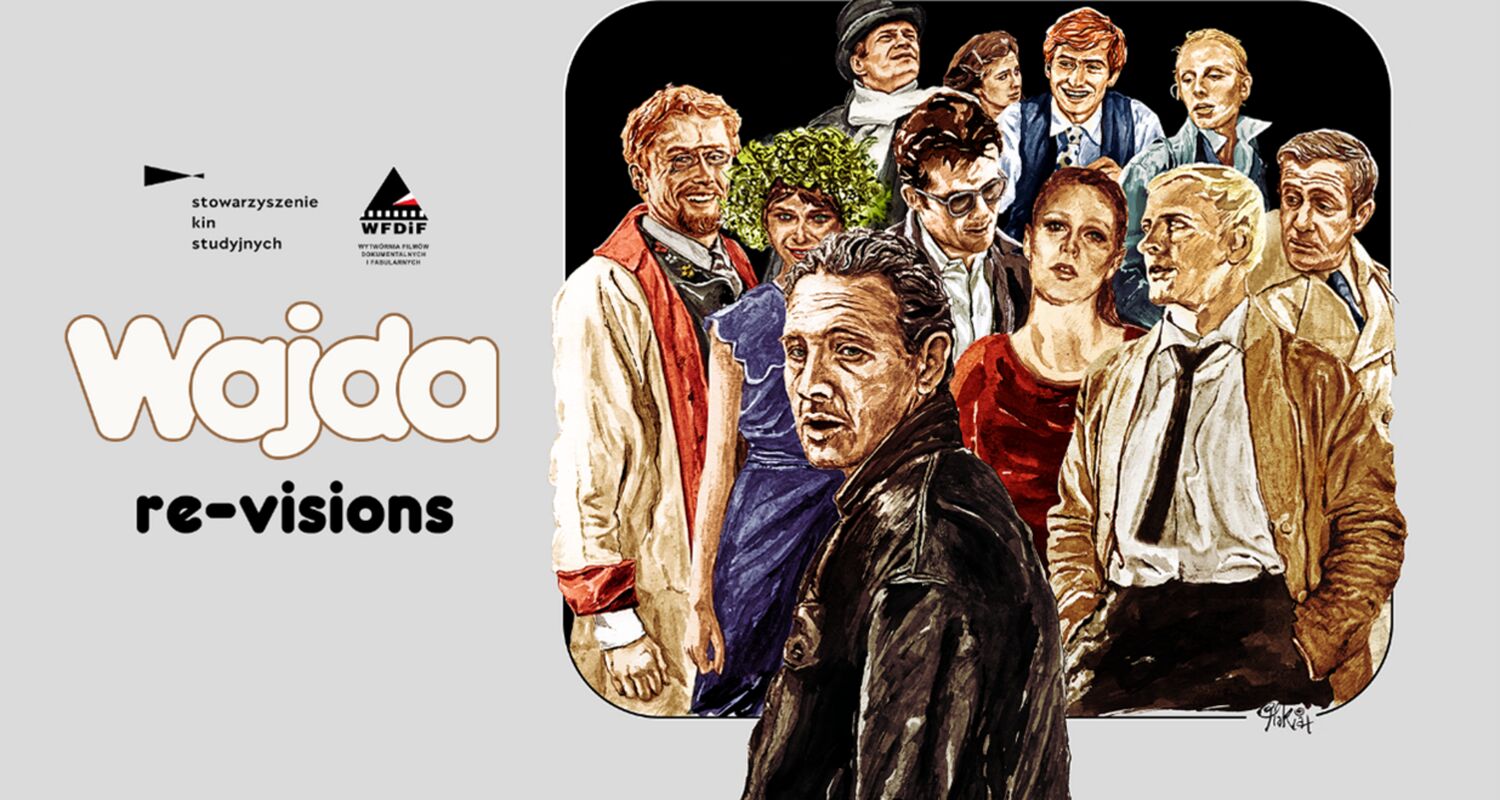
WAJDA: re-visions. A Retrospective of Andrzej Wajda’s Films on the 100th Anniversary of his Birth
• EACD
• Programming
On the centenary of Andrzej Wajda’s birth, CICAE and Stowarzyszenie Kin Studyjnych invite audiences to a special retrospective, „WAJDA: Re-Visions”—a cycle of ten films by one of the most outstanding figures in world cinema. This program is not only a tribute to the director’s legacy, but also an opportunity to revisit his work from a contemporary perspective. Seen today, in a different historical and social context, these films remain deeply moving, provocative, and inspiring.
By playing the video, you accept YouTube's privacy policy.
Andrzej Wajda is the only Polish filmmaker to have received an Academy Award for Lifetime Achievement and remains one of the most important figures in international cinema. A director, screenwriter, theatre director, artistic head of the legendary „X” Film Unit, educator, and activist in the democratic opposition, he viewed cinema as an artistic, civic, and moral commitment.
Although he is sometimes perceived today as a monumental, historical figure, Wajda remains a surprisingly modern filmmaker. His films continue to impress with their narrative mastery, dynamic rhythm, painterly sensibility, and powerful metaphorical language. He was a true demiurge of the film set. Always impeccably prepared, energetic, and passionate, approaching actors and collaborators with remarkable sensitivity. He discovered new talents, inspired younger generations of artists, and consistently drew the very best from entire creative teams.
The film selection highlights the diversity of his oeuvre: alongside widely recognized masterpieces, the program includes titles that today call for renewed interpretation. The series follows the rhythm of the calendar year—each month features a different film, corresponding to the season and mood. The Retrospective opens with „Ashes and Diamonds” (1958)—a landmark film, both the most important and the most personal in Wajda’s career.„
WAJDA: Re-Visions” is an invitation to engage in dialogue with the classics—to rediscover films that helped shape our cinematic language and collective sensibility. The retrospective is addressed both to audiences who grew up with Wajda’s films and to younger viewers, for whom this will be their first opportunity to experience his work on the big screen.
ASHES AND DIAMONDS (1958)
One of the most famous films in Polish cinema—a story of a young resistance fighter torn between duty and the desire for a normal life, blending romantic ethos with the tragic fate of the “cursed.”
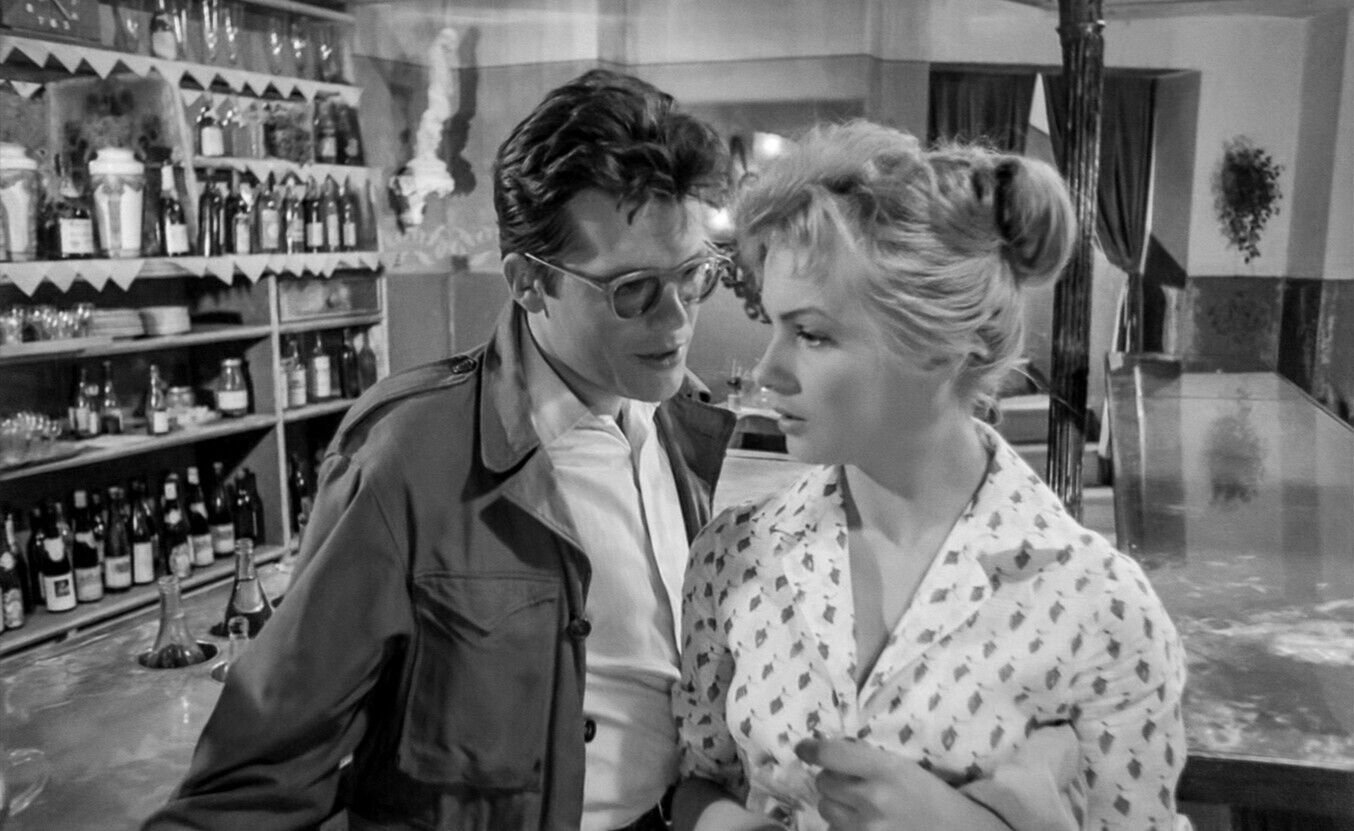
The final days of World War II. A young Home Army soldier, Maciek Chełmicki, is ordered to carry out one last mission: to assassinate a communist official arriving in a provincial town to take over power. As the hours pass, Maciek begins to question the sense of endless fighting, starts a brief romance with a hotel bartender, and observes a prewar elite celebrating the end of the old world. After years of war, Maciek longs simply to live and to love, yet he remains bound by duty, memory of the fallen, and the expectation of self-sacrifice.
Made during the political “Thaw,” this adaptation of Jerzy Andrzejewski’s novel significantly reworked the tensions and tones of its Stalinist-era source. Andrzejewski had conceived his book as an attempt to bridge the divides within Polish society, viewing the protagonists’ sacrifice as a final necessity after which weapons should be laid down and the country rebuilt—since the outcome of Yalta lay beyond Poland’s control. A few years later, such hopes seemed naïve: Stalinism revealed itself as a brutal repression marked by show trials, executions, propaganda, and anonymous graves. Wajda’s updating of the novel was shaped in close collaboration with Zbigniew Cybulski, whose modern, James Dean–inflected performance became one of the enduring myths of Polish culture.
Aware of inevitable censorship, the filmmakers turned to ellipsis and metaphor: the iconic scene of burning vodka glasses (in fact symbolic votive lights for Home Army soldiers killed during the war and Stalinist period, long denied public commemoration), the ruined church with an upside-down Christ, and the final images set on a garbage dump—read by audiences as a stark indictment of the authorities’ disregard for the sacrifice of thousands of young fighters, cast onto the rubbish heap of history. Maciek’s fate thus resonates both with Polish Romanticism (the title comes from a poem by Norwid) and with the post-1956 moral climate. To this day, the film remains the most powerful cinematic portrayal of the tragic destiny of Poland’s “cursed soldiers.”
written by: Jerzy Andrzejewski, Andrzej Wajda
based on a novel by: Jerzy Andrzejewski
DOP: Jerzy Wójcik
music arrangement: Filip Nowak
produced by: Film Unit „Kadr”
cast: Zbigniew Cybulski, Ewa Krzyżewska, Wacław Zastrzeżyński, Adam Pawlikowski, Bogumił Kobiela
awards: FIPRESCI Prize Venice IFF
running time: 99’
THE WEDDING (1972)
A visually, sonically, and narratively dazzling adaptation of Wyspiański’s drama—a modernist spectacle that demonstrates the universal power of Polish symbols and the expressive strength of national cinema.
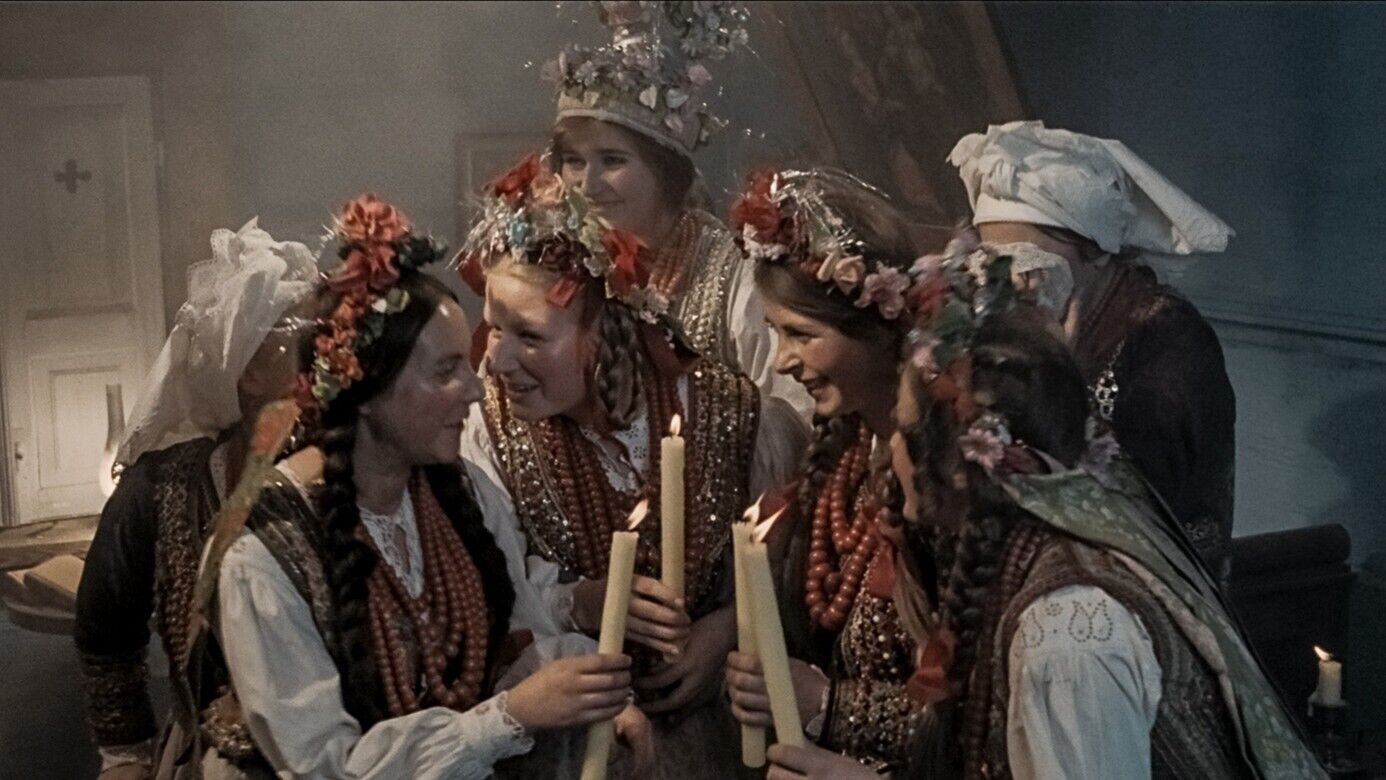
A portrait of the Polish intelligentsia and peasantry at the end of the nineteenth century, brought together at a wedding in a cottage in the village of Bronowice. Guests from two worlds—the Kraków intelligentsia and the local rural community—gather to celebrate the marriage of a writer and townsman (the Groom) to a peasant woman from Bronowice (the Bride). During a night of heavy drinking, individual characters—including the Journalist, the Poet, the Host, and Czepiec—encounter symbolic spectres that confront them with their attitudes, fears, and unfulfilled national aspirations. The lack of understanding between social classes and unresolved historical traumas ultimately makes any true unity impossible, even when the mysterious Wernyhora offers the wedding guests a chance to ignite a national uprising by handing over the Golden Horn.
Stanisław Wyspiański’s legendary play long seemed impossible to adapt for the screen. At the height of his creative powers, however, Wajda assembled an extraordinary team of artists from different fields (with sound shaped by Czesław Niemen, Eugeniusz Rudnik, and Stanisław Radwan), cast the finest actors of Polish theatre, reconstructed the cottage interior in a Warsaw studio, and filmed exteriors in Kraków and Bronowice. He infused the film with explosive visual energy, asking DOP Witold Sobociński to move the camera in rhythm with music played live on set. The result is a dazzling feast of colour and sound, driven by a masterful sense of rhythm, choreography, and movement—few films have ever so richly deserved an Academy Award for editing.
The first film produced by Film Unit “X,” The Wedding is saturated with painterly quotations and oneiric allegories, updated with symbols still vivid in the Polish consciousness of the 1970s. Few believed Wyspiański’s drama could be successfully adapted, yet this modernist masterpiece—dense with meaning and deeply rooted in Polish culture—proved the universality of Wajda’s cinematic language and the enduring vitality of a culture shaped by dissent.
written by: Andrzej Kijowski
based on a play by: Stanisław Wyspiański
DOP: Witold Sobocińskimusic: Stanisław Radwan
produced by: Film Unit „X”
cast: Daniel Olbrychski, Ewa Ziętek, Andrzej Łapicki, Wojciech Pszoniak, Marek Walczewski, Franciszek Pieczka
awards: Silver Shell San Sebastián IFF
running time: 102’
INNOCENT SORCERERS (1960)
Light in tone yet serious in meaning, this portrait of Warsaw’s young intellectuals in the early 1960s captures a longing for authenticity in a world of poses and conventions—and remains a key work of the Polish New Wave.
During a single night spent together, Bazyli, a sports doctor and jazz musician, and Pelagia, about whom we know very little, engage in a subtle game—teasing each other and trying to flee from their own emotions. They hide behind words and poses, as if truth were the most dangerous and strictly limited commodity in People’s Poland. Roaming through nocturnal Warsaw, they drift from one encounter to another, attend a private party at friends’ place, talk with other young people, and at dawn return to Pelagia’s apartment, where their relationship is finally tested by intimacy and the choice between staying together or parting ways. Aware of the external constraints surrounding them, they attempt to live out their youth, poised between modern self-awareness and emotional immaturity.
A generational portrait of young people set against the beautifully filmed Warsaw of the late 1950s and early 1960s, accompanied by Krzysztof Komeda’s jazz-inflected score, the film stands today as a vivid document of the era of the early “little stabilization.” Poorly received by the authorities, it waited a year for its release and eventually reached audiences only in a lightly censored, limited distribution. It was Wajda’s first film to address contemporary subject matter and one of the earliest signs of the emerging Polish New Wave.
written by: Jerzy Skolimowski, Jerzy Andrzejewski
DOP: Krzysztof Winiewiczmusic: Krzysztof Komeda
produced by: Film Unit „Kadr”
cast: Tadeusz Łomnicki, Krystyna Stypułkowska, Roman Polański
running time: 84’
MAN OF MARBLE (1977)
A revelatory journey through archives and memory in Stalinist Poland, exposing propaganda’s power to destroy the individual and standing as one of the most important cinematic portraits of systemic oppression.
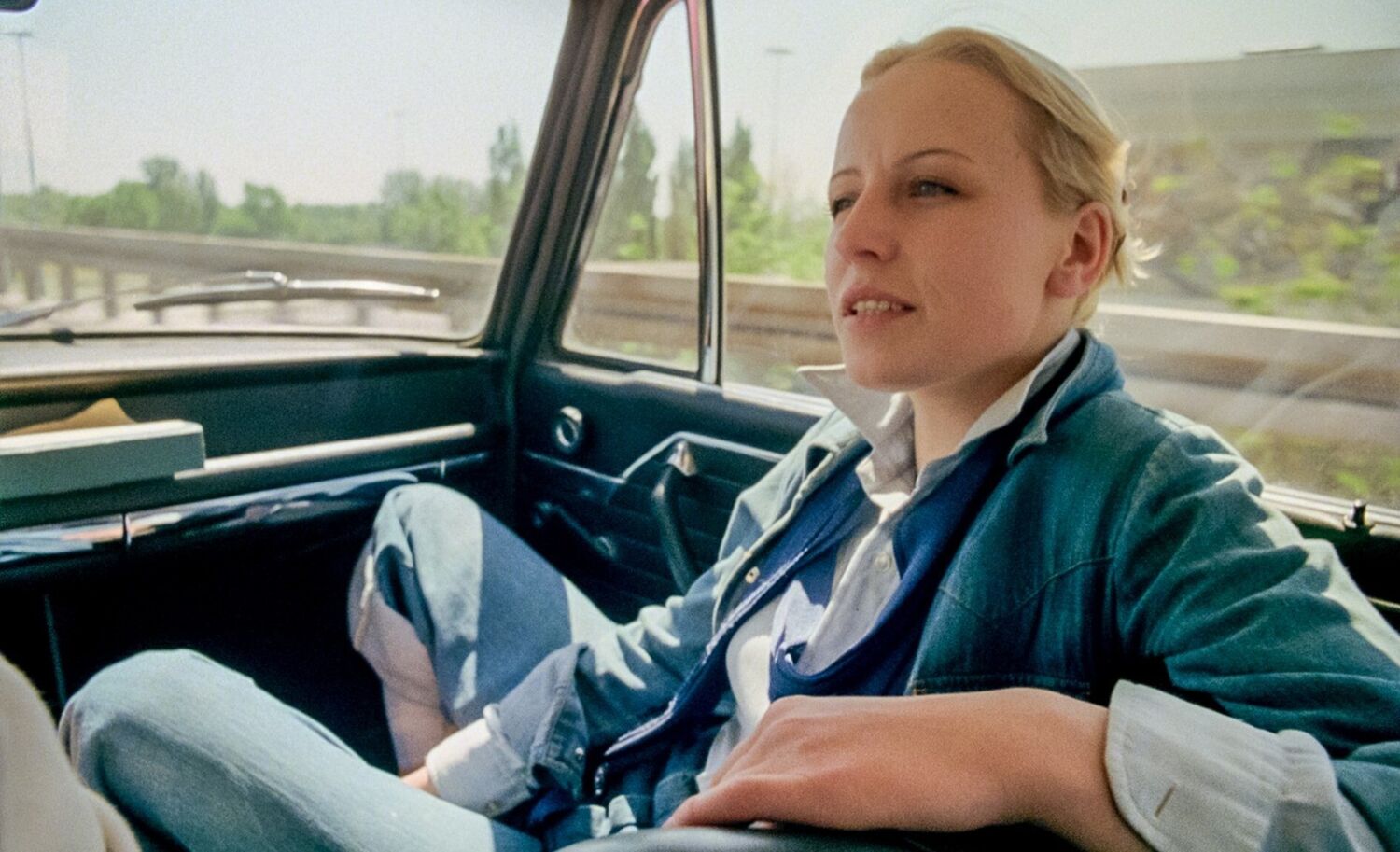
Agnieszka (a dazzling debut by Krystyna Janda), a young, sharp-tongued film director, decides to make a film about the Stalinist model worker Mateusz Birkut (Jerzy Radziwiłowicz). Her attention is drawn not only to a marble statue of the young man abandoned in museum storage, but also to an archival film showing his portrait being torn down from a wall. As Agnieszka traces the tangled fate of Birkut, she uncovers the private stories of people entangled in—and destroyed by—the communist system. Her investigation leads her to those closest to him: friends, co-workers, secret police officers, journalists, and his former wife. She enters a world of manipulation, false hopes, propaganda, and lies, where one can be celebrated as a hero of the people one day and condemned to censorship-driven oblivion the next. Totalitarianism emerges as a system in which fame and erasure are separated by a single political decision.
Aleksander Ścibor-Rylski wrote the screenplay in the early 1960s, and Wajda spent years unsuccessfully trying to bring the project to the screen, at one point hoping to cast Agnieszka Osiecka in the lead role. Only a change at the highest levels of power—when the more liberal Józef Tejchma, personally involved in the construction of Nowa Huta, became Minister of Culture—made the film’s production possible. The communist party apparatus reacted with unease: the film was released, but without any promotion, barred from the Cannes competition (where it nonetheless received the FIPRESCI Prize out of competition), and Tejchma soon paid for his decision with the loss of his position.
Yet thanks in part to this support, one of the masterpieces of Polish cinema came into being. Drawing on a Citizen Kane–inspired narrative structure, Wajda told a story about the Stalinist era, its victims and beneficiaries, the exploitation and destruction of the individual, and the awakening of class consciousness among workers. He cast the screen-debuting Krystyna Janda opposite the young Jerzy Radziwiłowicz, framing the past through the lens of post-1968 rebellious modernity and underscoring it with Andrzej Korzyński’s dynamic score. Wajda did not anticipate that the film would inaugurate a trilogy about the working class: while Man of Marble was one of the very few portrayals of Stalinism made during the People’s Republic of Poland, its sequel, Man of Iron—awarded the Palme d’Or at Cannes—became a symbol of the Solidarity era, and together with Man of Hope
formed a triptych about proletarian revolt and the hard-won wisdom that internal conflict and bloodshed are the greatest dangers facing Poland.
written by: Aleksander Ścibor-Rylski
DOP: Edward Kłosińskimusic: Andrzej Korzyński
produced by: Film Unit „X”
cast: Krystyna Janda, Jerzy Radziwiłowicz, Tadeusz Łomnicki
awards: FIPRESCI Prize Cannes IFF
running time: 153’
BIRCH WOOD (1970)
A sensual, painterly meditation on life and death—an existential confrontation between the affirmation of existence and the abyss of mourning, revealing universal truths about human nature.
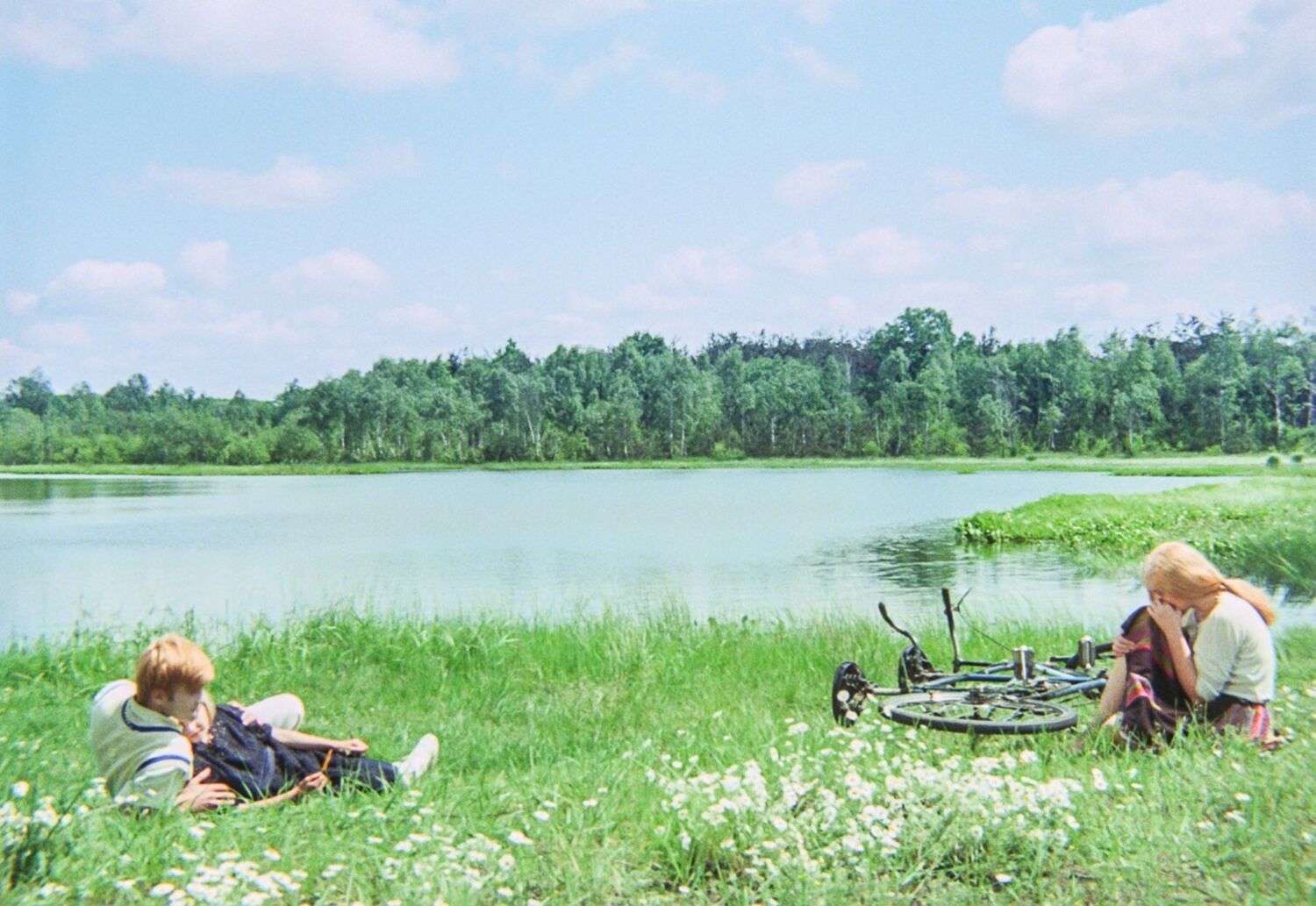
Suffering from tuberculosis, Staś arrives at the home of his older brother, and their reunion is marked by the presence of death. Though dying, Staś longs to savour every moment of his final days, embracing life with intensity and sensual joy. His brother Bolesław, physically healthy, sinks ever deeper into mourning after the loss of his wife. Staś begins an affair with a village girl, plays lively melodies on the piano, and tries to live each hour to the fullest, while Bolesław descends into depression, mistreats his daughter, rejects all signs of happiness, and not only seeks suffering for himself but demands it of others.
In this sensually beautiful adaptation of a short story by Jarosław Iwaszkiewicz, the bonds between Eros and Thanatos define the meaning of human existence. Life and death, sexuality and corporeal stillness are brought together in perfect balance. Wajda created one of his most visually striking films, drawing on landscape painting and turn-of-the-century symbolism, and offering a masterful cinematic interpretation of Jacek Malczewski’s painting Death in one unforgettable scene. Made initially for television, the film did not enjoy wide distribution at first, but when it reached Western audiences a decade later, it was embraced as one of the greatest masterpieces of the director’s career.
written by: Andrzej Wajda
based on a short story by: Jarosław Iwaszkiewicz
DOP: Zygmunt Samosiuk
music: Andrzej Korzyński
produced by: Film Unit „Tor”, TVP
cast: Daniel Olbrychski, Olgierd Łukaszewicz, Emilia Krakowska
running time: 99’
CHRONICLE OF LOVE ACCIDENTS (1985)
A love story unfolding in the final moments before the war in the Vilnius region—a richly colored portrait of the multicultural Second Polish Republic and a deeply nostalgic vision of a world vanishing forever.
The Vilnius region on the eve of World War II. Against a vivid panorama of the multicultural world of the Second Polish Republic, a tender love story unfolds between Witek, a sensitive high school student, and Alina, the daughter of an army officer. As Witek wanders through the countryside in pursuit of love, he passes through a world on the brink of disappearance: a landed gentry manor, cavalrymen preparing for war, a Jewish school, a group of summer visitors from the big city, Orthodox mourners, and a German pastor making plans to emigrate. He moves through these places almost without reflection, focused solely on love, even as the surrounding world quietly braces itself for annihilation.
Chronicle of Love Accidents is one of Andrzej Wajda’s most lyrical and sensual films—joyful, erotic, even flirtatious in tone, yet ultimately imbued with a sense of catastrophe and the end of an era. It is also a masterpiece of nostalgia for the “years of childhood” shared by the novel’s author Tadeusz Konwicki and Wajda himself, who grew up in nearby Suwałki. This vision is heightened by Edward Kłosiński’s exquisite cinematography, capturing the light of a waning summer, and by Wojciech Kilar’s memorable score, structured around two contrasting themes: a military march and a lyrical love motif. Made in the 1980s, the film was not only one of Wajda’s rare autobiographical works, but also a powerful act of remembrance, restoring the erased memory of the multinational Second Polish Republic and offering a quiet yet defiant escape from the bleakness of the Jaruzelski decade.
written by: Tadeusz Konwicki
based on his own novel
DOP: Edward Kłosiński
music: Wojciech Kilar
produced by: Film Unit „Perspektywa”
cast: Paulina Młynarska, Piotr Wawrzyńczak, Joanna Szczepkowska, Leonard Pietraszak
running time: 114’
LANDSCAPE AFTER THE BATTLE (1970)
A poetic meditation on the trauma of camp survivors, a haunting study of shattered psyches and love irreversibly marked by the experience of death.
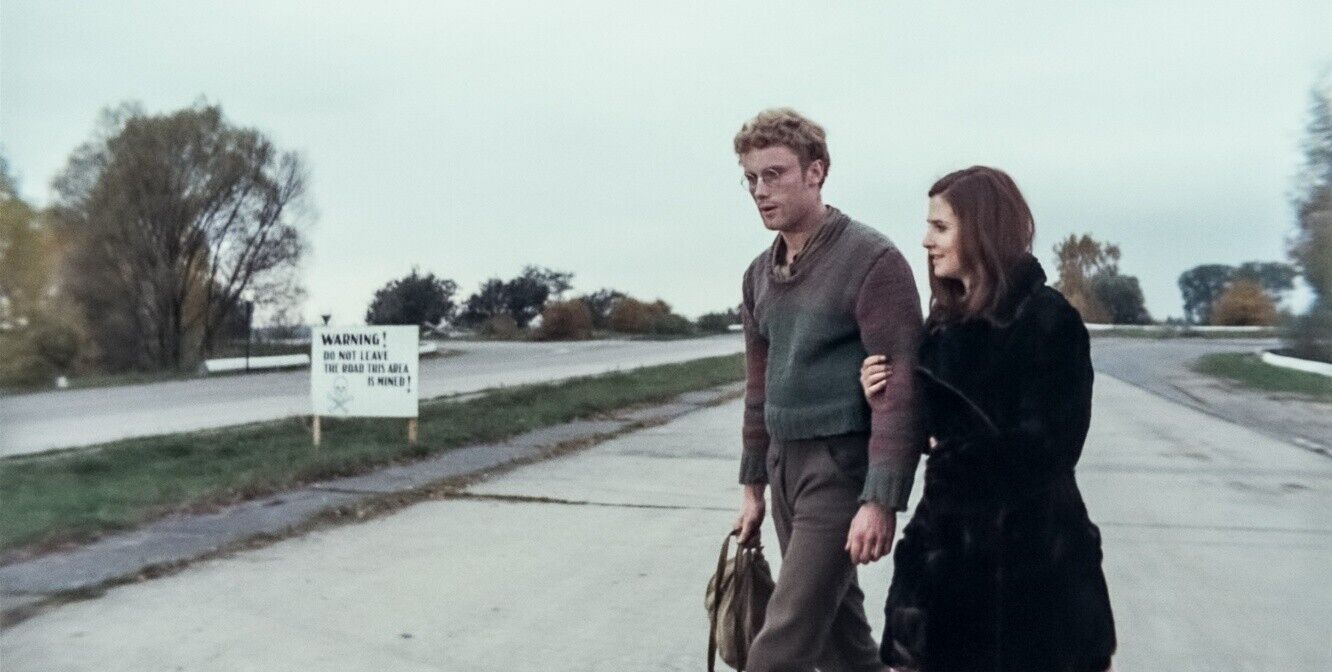
In a former concentration camp liberated by the American army, now transformed into a displaced persons camp, we meet a small group of Poles trying to relearn the rhythms of normal life after years of imprisonment. Tadeusz, refuses to take off his camp uniform, wanders among the barracks repurposed by the Americans, and meets Nina, a beautiful Jewish. The mark of death prevents the characters from living and loving, haunting them relentlessly and leading toward an unavoidable tragedy.
Landscape After the Battle is one of Wajda’s most bitter films—a further variation on his recurring story of people who survived the hell of war yet remain unable to rid themselves of trauma. The characters seem to belong more to death than to life, drifting among the living like ghosts. They long for love, but even when it briefly becomes possible, a cruel fate thwarts the fulfilment of their hopes.
written by: Andrzej Brzozowski, Andrzej Wajda
based on a short story by: Tadeusz Borowski
DOP: Zygmunt Samosiuk
produced by: Film Unit „Wektor”
cast: Daniel Olbrychski, Stanisława Celińska, Tadeusz Janczar
awards: Golden Globe Milan IFF
running time: 101’
ROUGH TREATMENT (1978)
A haunting diagnosis of late-1970s society and a portrait of a man trapped by both the system and his own weaknesses—one of the most penetrating analyses of moral crisis in Polish cinema.
A bleak portrait of Poland’s political and social reality in the late 1970s, the film offers a sharp diagnosis of attitudes shaped by mistrust and systemic oppression. A popular reporter—modeled on the figure of Ryszard Kapuściński—returns home from another foreign assignment only to discover, to his astonishment, that he has become the target of a coordinated smear campaign, launched without explanation. At work he is harassed by a younger colleague, within his professional circle he is accused of opportunism and careerism, and at home his wife files for divorce. Once a man of success, suddenly abandoned by everyone, he finds himself in a Kafkaesque situation that strips him of faith in values, relationships, and even the meaning of life itself.
The protagonist had once benefited from the very system that now turns against him—a system that silently grants privileges only to destroy its former favourites without warning. Few films have exposed so brutally the mechanisms of communist totalitarianism: its hypocrisy, opportunism, professional envy, promotion of mediocrity, and the temptations of advancement. Even fewer have proven so prophetic and enduringly relevant, depicting a world of eroded values, the objectification of individuals, and the pervasive reign of lies and manipulation.
written by: Agnieszka Holland, Andrzej Wajda
DOP: Edward Kłosiński
produced by: Film Unit „X”
cast: Zbigniew Zapasiewicz, Ewa Dałkowska, Andrzej Seweryn, Krystyna Janda
awards: Golden Lions FPFF Gdańsk, Jury Prize Cannes IFF
running time: 125’
THE PROMISED LAND (1974)
A sweeping vision of emerging capitalism and ruthless economic struggle in nineteenth-century Łódź, and a monumental portrait of the birth of modernity and the human cost it demands.
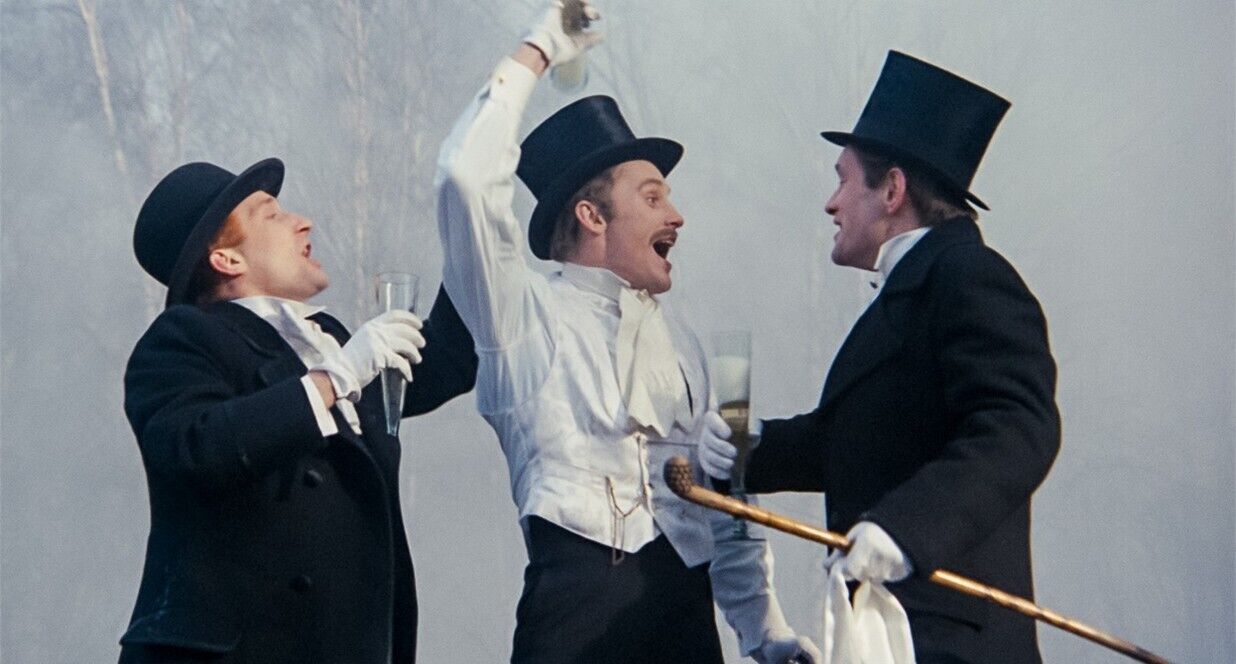
A brilliant adaptation of a now largely forgotten novel by Władysław Reymont, the film traces the intertwined fates of three friends against the backdrop of the rapidly industrializing city of Łódź at the end of the nineteenth century: the German Maks, the Jew Moryc, and the Pole Karol. Determined to establish their own textile factory, they soon find themselves at odds with powerful Jewish, German, and Russian competitors who dominate the local market. Along the way, Karol Borowiecki seduces Lucy Zucker, the alluring wife of an aging industrialist, using the affair to secure capital, while Moryc Welt engages in risky financial and commercial schemes within the Jewish business milieu, constantly teetering on the edge of bankruptcy and fraud. At the same time, Maks Baum negotiates with German manufacturers in an attempt to save his family’s declining enterprise, as influential financiers such as Bucholz, Grünspan, and Müller seek to draw the ambitious young men into their own ruthless ventures. In pursuit of his plans, Borowiecki ultimately chooses to sell his family estate, bring his fiancée Anka to Łódź, and subject lofty ideals to the harsh, predatory rules of capitalism.
Visually dazzling, narratively expansive, and driven by extraordinary performances, the film consistently tops rankings of the greatest works in the history of Polish cinema. The famous theatre sequence alone is now regarded as one of the crowning achievements of cinematic storytelling, compressing dozens of characters and narrative threads into a single, tightly choreographed space. The only major prize missing from its long list of honours was the Academy Award, which the film narrowly lost despite being a frontrunner, amid unfair accusations of antisemitism.
written by: Andrzej Wajda
based on a novel by: Władysław Reymont
DOP: Witold Sobociński, Edward Kłosiński, Wacław Dybowski
music: Wojciech Kilar
produced by: Film Unit „X”
cast: Daniel Olbrychski, Wojciech Pszoniak, Andrzej Seweryn, Anna Nehrebecka, Kalina Jędrusik
awards: Golden Lions FPFF Gdańsk, Academy Award (Nomination) for Best Foreign Language Film
running time: 179’
EVERYTHING FOR SALE (1968)
A self-reflective story about the film world, an intimate tribute to Zbigniew Cybulski, and a deeply personal story of loss, memory, and the mythology of cinema.
During the film production, the actor playing the leading role suddenly leaves the set and never returns. The director (Andrzej Łapicki) tries to keep the project alive, driving through Warsaw and its surroundings and meeting, one after another, the actor’s wife (Beata Tyszkiewicz), his former partner (Elżbieta Czyżewska), and a close friend (Daniel Olbrychski), attempting both to understand the reasons for the disappearance and to find a way to complete the film. Increasingly lost and helpless, he feels ever more alienated from the cliques, social rivalries, and pervasive lies of the film community. By dawn, news reaches the characters of the actor’s tragic death—but the film must go on.
Everything for Sale is a self-reflective story about the loss of a friend and a great actor. In this deeply personal work, for which Wajda wrote an original screenplay on his own for the first time, the director considers the phenomenon of Zbigniew Cybulski, portrays the Polish film milieu, and—more directly than ever before—speaks about himself. Wajda’s alter ego is played by Andrzej Łapicki, while the remaining actors infuse their roles with their own experiences and personality traits. As a result, Everything for Sale becomes an intimate yet boldly shot, expressive, and the most overtly modernist film of Wajda’s career—a cinematic response to the words Cybulski was said to have uttered shortly before his death: “Tell him he’ll miss me yet.”
written by: Andrzej Wajda
DOP: Witold Sobociński
music: Andrzej Korzyński
produced by: Film Unit „Kamera”
cast: Andrzej Łapicki, Beata Tyszkiewicz, Elżbieta Czyżewska, Daniel Olbrychski
awards: Warsaw Mermaid MFF Łagów
running time: 94’
Filmography
1954 — Pokolenie (A Generation)
1957 — Kanał (Kanal)
1958 — Popiół i diament (Ashes and Diamonds)
1959 — Lotna
1960 — Niewinni czarodzieje (Innocent Sorcerers)
1961 — Samson
1962 — Powiatowa Lady Makbet (Siberian Lady Macbeth)
1965 — Popioły (The Ashes)
1968 — Bramy raju (Gates of Paradise)
1968 — Przekładaniec (Layer Cake)
1969 — Wszystko na sprzedaż (Everything for Sale)
1969 — Polowanie na muchy (Hunting Flies)
1970 — Brzezina (The Birch Wood)
1970 — Krajobraz po bitwie (Landscape After the Battle)
1972 — Pilatus und andere (Pilate and Others)
1973 — Wesele (The Wedding)
1974 — Ziemia obiecana (The Promised Land)
1976 — Smuga cienia (The Shadow Line)
1977 — Człowiek z marmuru (Man of Marble)
1978 — Bez znieczulenia (Rough Treatment)
1979 — Panny z Wilka (The Maids of Wilko)
1980 — Dyrygent (The Conductor)
1981 — Człowiek z żelaza (Man of Iron)
1983 — Danton
1983 — Miłość w Niemczech (Love in Germany)
1985 — Kronika wypadków miłosnych (A Chronicle of Amorous Incidents)
1988 — Biesy (The Possessed)
1990 — Korczak
1994 — Nastasja (Nastasya)
1995 — Wielki Tydzień (Holy Week)
1996 — Panna Nikt (Miss Nobody)
1999 — Pan Tadeusz
2002 — Zemsta (Revenge)
2007 — Katyń
2009 — Tatarak (Sweet Rush)
2013 — Wałęsa. Człowiek z nadziei (Walesa. Man of Hope)
2016 — Powidoki (Afterimage)
Bookings & Access
For bookings and access to reconstructed and digitized films and related materials, please contact:
President, Arthouse Cinema Association
Marlena Gabryszewska
m.gabryszewska@stowarzyszeniekinstudyjnych.pl
Licensing & Screening Inquiries
Klaudia Małota
k.malota@stowarzyszeniekinstudyjnych.pl
Licence fee: €250 per screening
Format: DCP with or wihout English subtiles
24.02.2026