New Pathways for Repertory Cinema
One of the most exciting developments in film exhibition in recent years, has been a growing interest in repertory titles. Lots has been written about the audience development potential of classic cinema, [rp1] especially among a new generation of MUBI and Letterboxd-inspired Gen Z cinephiles, and about creative approaches [rp2] to marketing “old movies” to new cinema goers.
However, when we look beyond the obvious titles – the anniversary reissues and canonical classics – tracking down rightsholders and screenable materials for repertory titles can quickly become complicated. Taking a chance on less well known films can also feel risky, especially when you factor in the high costs and time consuming research that goes into sourcing rare titles.
Luckily, the experts are on it. At our recent Arthouse Cinema Meets session, which took place on the Wednesday 8 July 2026, we brought together a panel of contributors from all over the world who are developing innovative solutions to these challenges.
New Platforms for Old Movies
A key barrier that many programmers face when screening repertory is finding those films in the first place. In recent years, several new specialist platforms have emerged to address the evergreen challenge of sourcing rights and materials.
François Morisset, founder of the sales, co-production and distribution company Salaud Morisset, has been applying his industry experience to the issue of improving access to screen heritage with his new project Arkino[rp3]. “We identified three bottlenecks to programming heritage cinema,” he explains. “Finding out who the rights holder is, getting materials and subtitles, and getting fair financial conditions to screen the film.” Arkino is a global database which is beginning to tackle these bottlenecks by connecting programmers with rightsholders. The project is still in the testing phase, but already Arkino is helping cinemas around the world book titles – Morisset cites a recent screening of Cinema Paradiso in Nigeria as an example – and there are plans to add increasingly sophisticated filters to allow users to search for specific criteria, such as female filmmakers or key genres.
As manager of the Le Lucernaire [rp4] cinema in Paris and founder of distribution consultancy The Festival Agency[rp5], Leslie Vuchot also has extensive experience working across the exhibition sector. Her new platform Timeless Cinema, offers a combination of curatorial, rights clearances and booking services to help exhibitors integrate classic films into their programmes. “Basically, we want to centralize it, for programmers to discover the films and be immediately in the position of making a booking,” says Vuchot. Rights remain with the original license holders, who can control their own terms and screening conditions, but Timeless Cinema aims to make the booking process more efficient and transparent by centralising information about existing subtitles, materials and license holders, and assisting with negotiations where needed.
Reimagining National Cinema History
As the Arkino and Timeless Cinemas case studies demonstrate, the globalisation of film culture means that Hollywood classics and retrospectives of internationally recognised directors frequently screen at cinemas all around the world. For archivists and distributors focused on national film history outside of the largest filmmaking hubs, the challenge is to continue to advocate for a country’s unique film heritage.
“We have an issue that I think probably all of us deal with in various degrees, but which affects Canada especially because we are right next to Hollywood,” says Sonya Yakota William, founder and director of the Network of Independent Canadian Exhibitors (NICE). [rp6] “It has been a priority within Canada for a long time now to make sure that we are telling our own stories, that we have a national film library… and that the films we celebrate take ownership of the story of being Canadian.”
To address the “discoverability issue” faced by Canadian cinema, NICE recently launched the Canadian Movie Marketplace[rp7], a website which makes it easier to book national titles. The website is operated by rightsholders themselves, who update their titles with metadata, terms, classifications and other information. These entries are then easily searchable by cinemas, who can contact rightsholders directly. The simplicity of the marketplace is part of its appeal – anyone can submit a film, including individual filmmakers who might be self-distributing. The effect can be empowering, especially for smaller film industries, and William is keen to emphasise that anyone could set up a similar system themselves in their own country. “This is an initiative we’ve started, in the pursuit of getting more Canadian films booked,” she says. “It’s about getting more visibility for Canadian films based on different topics, and on the people and communities they might touch.”
Small Countries, Big Movies

Triinu Keedus, Film Heritage Coordinator at The Estonian Film Institute[rp8] , recognises William’s experience of raising awareness of less prominent cinema histories. “Our main challenge is to be visible, coming from a small country,” she says. “Our film directors and films are dearly beloved in Estonia, but not that well known internationally.” To address this issue, the institute has become increasingly active in major film markets, such as those in Berlin and Lyon, where they often work in collaboration with their counterparts in other Baltic countries to increase visibility.
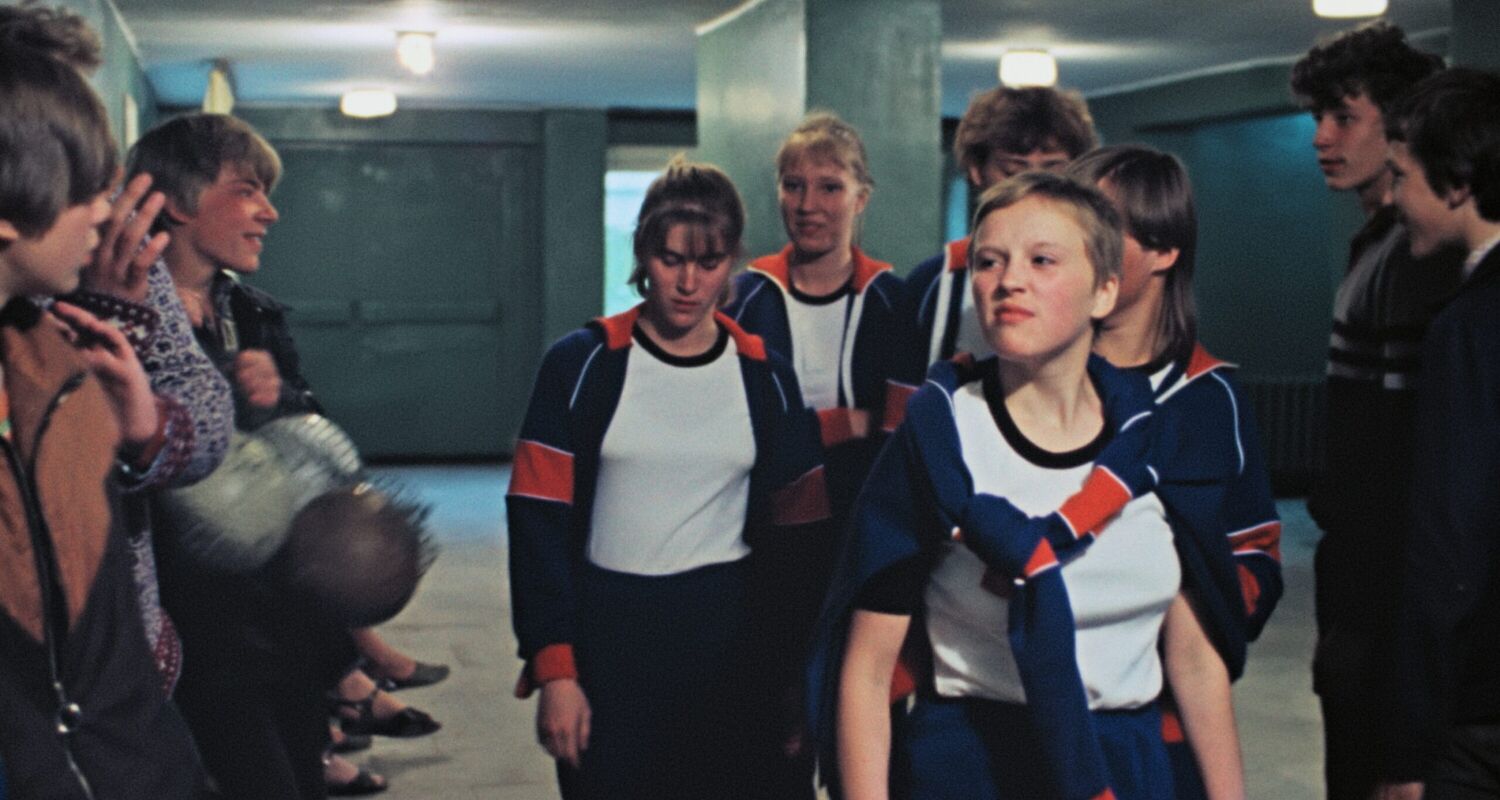
Last year Leida Laius’s Smile at Last[rp9] (1985) became the first Estonian title to be selected for Berlinale Classics. “That recognition opened the door to festival invitations and special screenings around the world,” says Keedus. “It demonstrates how being selected to a major festival, combined with effective international promotion, can transform national film into one that reaches global audiences.” Another recent success is the 2026 restoration of Grigori Kromanov’s Dead Mountaineers Hotel (1979), which was also selected for the Berlinale and has now become the first Estonian classic to secure distribution in the US and Canada.
Although Hungarian film heritage has a greater international profile than Estonian, György Ráduly, Director of the Film Archive at the National Film Institute Hungary, also argues for the importance of festivals as showcases for classic film. The archive has often presented titles at Cannes, Venice and Il Cinema Ritrovato, and Ráduly has even founded a festival, Budapest Classics Film Marathon, [rp10] to increase engagement among public audiences in Hungary. Film education is also a crucial part of Ráduly’s work, and the archive offers subsidised film screenings to thousands of schools each year, supplemented with online resources and archive materials to help teachers contextualise the work for their students.
This extensive programme is all the more impressive considering the recent turbulent political situation in Hungary. In 2016, the Hungarian Film Archive was on a list of state institutions slated for closure. After widespread protests from film professionals in the country and beyond, the archive was saved and instead integrated into the National Film Institute. This existential crisis, seems to have brought the conversation about the importance of saving film archives back into the public conversation. “Film preservation became very important for Hungary’s cultural politics,” explains Ráduly. “Today we are experiencing a very exciting moment in Hungary… We are really at the beginning of this process, but from what we can tell, the new government is highly supportive of Hungary’s cinema.”
Activating the Archives
For those like Ráduly and Keedus who work at national archives, the biggest challenge is less about tracking down titles, and more about raising awareness of the wealth of material already held in their collections.
Marlena Gabryszewska, president of the Polish Arthouse Cinema Association[rp11] , oversees distribution initiatives centred on creating opportunities for exhibitors to screen Polish classics. In Poland, as in many countries, demand for classic titles has been surging since the pandemic, when traditional distribution was disrupted by lockdowns. As new releases became a riskier preposition for cinemas, the association saw an opportunity to fill this gap with repertory titles, and began to negotiate with license holders to offer heavily discounted costs on classic titles. The association now has a catalogue of over 400 titles, including films by Agnieszka Holland, Krzysztof Kieślowski, and Andrzej Wajda. Alongside these foundational Polish works, they offer international classics, including collaborations with the Goethe Institute on retrospectives of Werner Herzog and Wim Wenders, and with the Japanese embassy on a Akira Kurosawa season.
Part of the success of this project has hinged on creative packaging and framing. Gabryszewska highlights standout events organised around these retrospectives, including a Samourai sword demonstration connected to a Kurosawa screening, and a tour of Federico Fellini screenings with guest appearances from the director’s niece and last surviving relative, Francesca Fabbri Fellini. Their Short Story of Polish Cinema season featured 10 classic films packaged alongside video lectures from experts. This model has also used for other successful tours dedicated to national cinema such as Wajda: Re-Visions and Has: Chronicles of the Imagination, which marked the centenaries of Andrzej Wajda and Wojciech Jerzy Has respectively.
Each of these year-long programmes was widely attended in Poland, achieving thousands of admissions. For Gabryszewska, the most gratifying observation, has been the enthusiasm of young audiences for these titles. “Thanks to those kind of projects we can see that a lot of young audience came back to arthouse cinemas,” says Gabryszewska. “This is something amazing. We’ve had a lot of situations where, for example, this is someone’s first meeting with a classic film, or their first meeting with the arthouse cinema.”
Gabryszewska perhaps speaks for all of us with skin in the film heritage game, when she describes the value of nurturing this new generation of classic film enthusiasts: “This is very important to us, and this is something we are fighting for.”
- To read more about exhibiting repertory cinema, try our pieces on Access, Availability and the Future of Repertory Films and Growing Admissions through Repertory Programming.
[rp1]LINK: https://arthousecinemahub.com/best-practices/growing-admissions-through-repertory-programming#:~:text=A%20growing%20trend&text=According%20to%20the%20CNC%2C%20repertory,%2DTerrestrial%22%20topping%20the%20list
[rp2]LINK: https://arthousecinemahub.com/best-practices/access,-availability-and-the-future-of-repertory-films
[rp3]https://arkino.eu/
[rp4]https://www.lucernaire.fr/
[rp5]https://www.thefestivalagency.com/
[rp6]https://nicecinema.ca/
[rp7]https://www.canadianmovies.ca/
[rp8]https://filmi.ee/en/from/
[rp9]https://www.berlinale.de/en/2025/programme/202503014.html
[rp10]https://nfi.hu/en/budapest-classics-film-marathon-2026
[rp11]https://stowarzyszeniekinstudyjnych.pl/
20.07.2026

Rachel Pronger
Rachel Pronger is a writer, curator and editor based in Berlin. She began her career working for festivals and cinemas across the UK, including Tyneside Cinema, Edinburgh International Film Festival and Alchemy Film & Arts. She has served as a programme advisor for Sheffield DocFest, BFI London Film Festival, Alchemy Film & Arts and Aesthetica Short Film Festival. Her writing on film and visual art has been published by outlets including Sight and Sound, Documentary Magazine, The Guardian, MUBI Notebook, Art Monthly and BBC Culture, and she is the co-editor of online journal Cinema of Commoning. Rachel is also the co-founder of Invisible Women, an archive activist feminist film collective which champions historic work by women and marginalised gender filmmakers through curation, events and editorial. more from the author